AI Crawlability for Generative Search: A Step-by-Step Guide
Master AI-enhanced crawlability checks for generative search engines. Optimize your online presence with Snezzi's AI Visibility Platform for better discovery.
Master AI-enhanced crawlability checks for generative search engines. Optimize your online presence with Snezzi's AI Visibility Platform for better discovery.
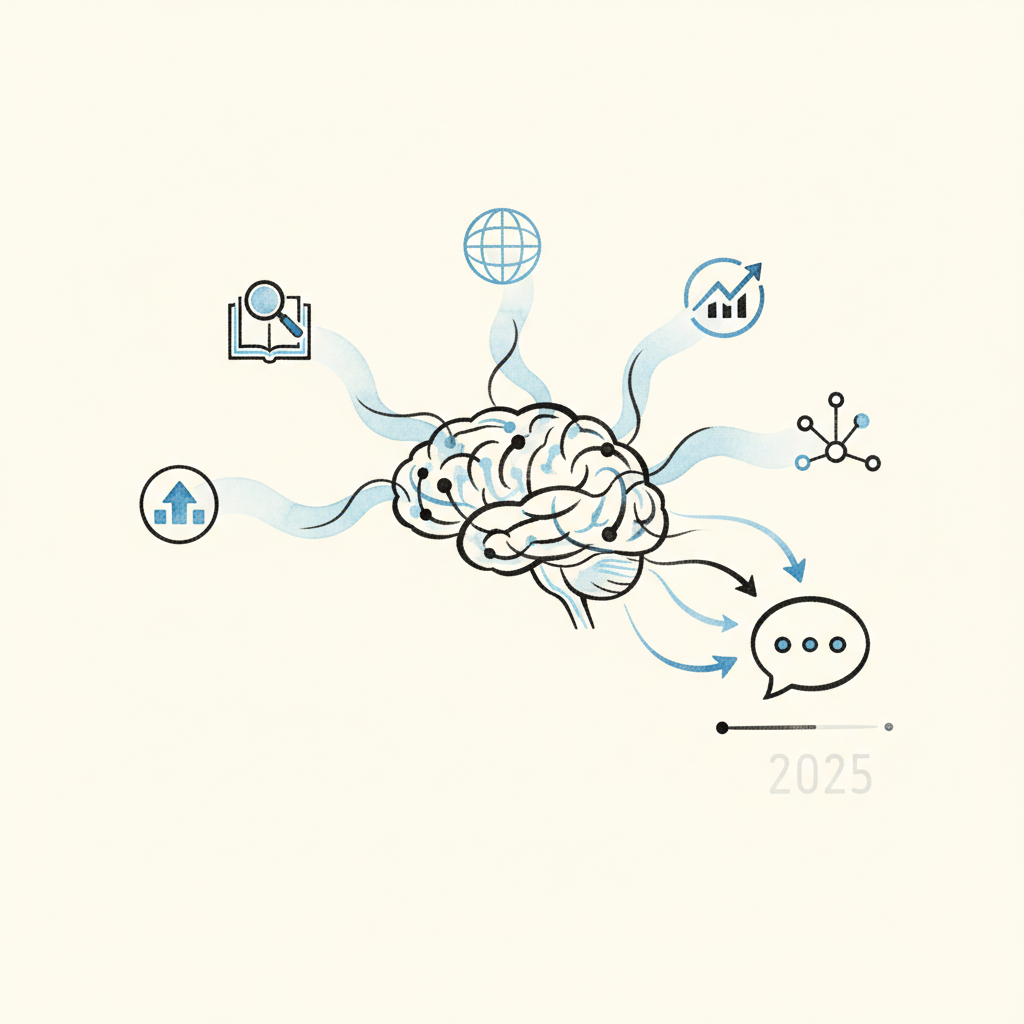
Search is changing faster than ever in 2025.
You might notice that traffic from Google looks different now.
That is because people use AI tools like ChatGPT or Perplexity to find answers. Understanding how AI chatbots pick sources is crucial for modern visibility.
These tools do not just list links like old search engines.
They read your content and build a new answer for the user.
If AI cannot read your site, you become invisible to these users.
This brings us to a vital new process for your website.
AI-Enhanced Crawlability Checks for Generative Search Engines are audits that ensure AI bots can read, understand, and use your content.
This guide helps you fix technical blocks and rank in this new era.
Traditional search engines use bots to scan your website for keywords.
They utilize these keywords to place your site on a list of blue links.
A Generative Engine (GE) works in a much more complex way.
It tries to understand the full meaning behind your words.
Industry experts reveal that AI crawlers focus on the contextual accuracy of raw HTML and formal data for generative search indexing [1].
This means the bot acts more like a human reader than a calculator.
It needs to know what you are saying, not just which words you use.
You must know how these two systems differ to win.
Traditional search focuses on indexing pages.
Generative search focuses on synthesizing facts.
TechTarget notes that generative search synthesizes direct answers, while traditional search lists links [2]. For a detailed comparison, see our article on GEO vs SEO ROI.
Here is the simple breakdown:
If an AI bot cannot parse your code, it will ignore you.
You need to optimize your site specifically for these new machines.
You need a plan to check your site health for AI.
This process is called AI crawler content auditing.
It helps you find the hidden errors that kill your visibility.
Start by looking at your technical foundation.
Many sites have errors that block AI bots without the owner knowing.
Common issues include messy code or blocked access in your settings.
Data shows that crawlability issues like missing schema block AI crawlers and reduce visibility significantly [1].
You must ensure your robots.txt file allows bots like GPTBot or ClaudeBot.
If you block them, they cannot learn from your content.
Review your site structure to ensure it is clean and simple.
Once the bots can access your site, they need to understand it.
You must optimize your text for AI driven query optimization.
This means writing in a way that answers questions clearly.
Avoid vague language or fluff.
A report from Bertelsmann explains that AI search engines prioritize natural language understanding over keyword matching [3].
Write as if you are speaking to a smart friend.
Use clear headings and short paragraphs.
This helps the AI connect your content to what users ask interactively.
robots.txt for AI bot permissions.Fixing your site is just the first step.
You must also use the right tools to grow your presence.
This is where specialized generative engine crawlability tools come into play.
You cannot fix what you cannot see.
Tools are essential to spot gaps in your code.
One of the most powerful tools you can use is Schema markup.
This is code that tells the AI exactly what your content is.
It tags parts of your page as “price,” “author,” or “reviews.” Learn more about structured data for AI search to implement this correctly.
Sagepath Reply states that structured data like schema boosts AI interpretation of content type [4].
Without schema, the AI has to guess.
Don’t let the AI guess.
For growing teams, using a dedicated Growth Plan for scaling AI visibility can help automate these checks.
These plans help you spot technical errors before they hurt your traffic.
How do you know if you are winning?
You need to track monitoring AI visibility metrics.
Old metrics like “rank” matter less now.
New metrics matter more.
According to Geneo, key generative search visibility metrics include citation rate and presence rate [5].
To dive deeper, explore our guide on how to measure GEO visibility. Tracking these numbers gives you a real view of your success.
Managing all these new signals is hard work.
This is where a platform like Snezzi becomes valuable.
It helps businesses track how often they appear in AI result summaries.
Lumar highlights that AI crawlability ensures content access for generative responses, which is critical for modern visibility [6].
Snezzi helps you see these gaps.
It acts as a central hub for your AI strategy.
It allows you to see where you win and where you lose.
If you are a large company, you might need Enterprise Plan capabilities to handle complex data across many pages.
This ensures no part of your business is left behind in the AI shift.
You must treat crawlability as a core business goal.
It is not just a task for your tech team.
It affects your sales, your brand, and your growth.
Start by updating your website to be friendly to bots.
Speed and clarity are your best friends.
If your site relies heavily on complex scripts, AI bots might struggle.
Backlinko reports that server-side rendering improves AI crawler access compared to JavaScript reliance [7].
This technical switch can make a huge difference.
It serves the full page to the bot immediately.
Beyond code, you need a plan for content updates.
Refresh your old posts with clear facts and updated data.
Integrate these technical steps into your Business Plan features.
This ensures your strategy covers both content creation and technical delivery.
The rules of search will keep changing.
AI models get smarter every month.
To stay ahead, keep your code clean and your facts straight.
Focus on generative search crawlability optimization.
If you build a strong foundation now, you will rank well for years.
The main goal is to ensure AI search engines can access and understand your content context. It goes beyond simple indexing to ensure your site provides clear facts that AI can use to generate answers.
Schema markup creates a clear structure that helps bots understand your data instantly. It labels your content so AI knows exactly what is a product, a review, or a fact. Check out our guide on FAQ schema for AI discovery for practical implementation tips.
Technically yes, but it is not a good idea for long-term growth. If you block AI bots, you miss out on being cited in the direct answers that many users now rely on.
Yes, traditional SEO focuses on keywords and links for ranking lists. AI crawlability focuses on data structure and clarity so an engine can synthesize your content into a conversational answer.
Server-side rendering shows the full page content to the bot right away. Client-side rendering requires the bot to run scripts, which can fail or take too long, causing the AI to miss your content [7].
You should run AI search performance tracking audits at least once a quarter. AI technology changes fast, and frequent checks ensure you do not lose visibility due to a small technical error.
The way people search has changed forever.
AI-Enhanced Crawlability Checks for Generative Search Engines are now a requirement for digital success.
You must ensure your technical foundation supports this new wave of traffic.
Focus on clear code, structured data, and factual content.
Use tools that help you see how AI views your brand.
By fixing these areas, you ensure your business remains visible to the millions of people using AI today.
Start your audit today and secure your place in the future of search.
References [1] ResultFirst, “Impact of Crawlability on AI Search Rankings” [2] TechTarget, “GenAI Search vs Traditional Search Engines” [3] Bertelsmann, “SEO and SEM Strategies for Generative AI Search” [4] Sagepath Reply, “Optimize Content for Generative AI Search Engines” [5] Geneo, “Generative Search Visibility Metrics” [6] Lumar, “Optimize for AI Visibility” [7] Backlinko, “Generative Engine Optimization (GEO)”