AI Visibility Platforms Compared: The Definitive 2026 Guide
Compare the top 9 AI visibility platforms in 2026. Expert analysis of Snezzi, Profound, Otterly, and more to help you dominate ChatGPT, Perplexity, and AI search.
Compare the top 9 AI visibility platforms in 2026. Expert analysis of Snezzi, Profound, Otterly, and more to help you dominate ChatGPT, Perplexity, and AI search.
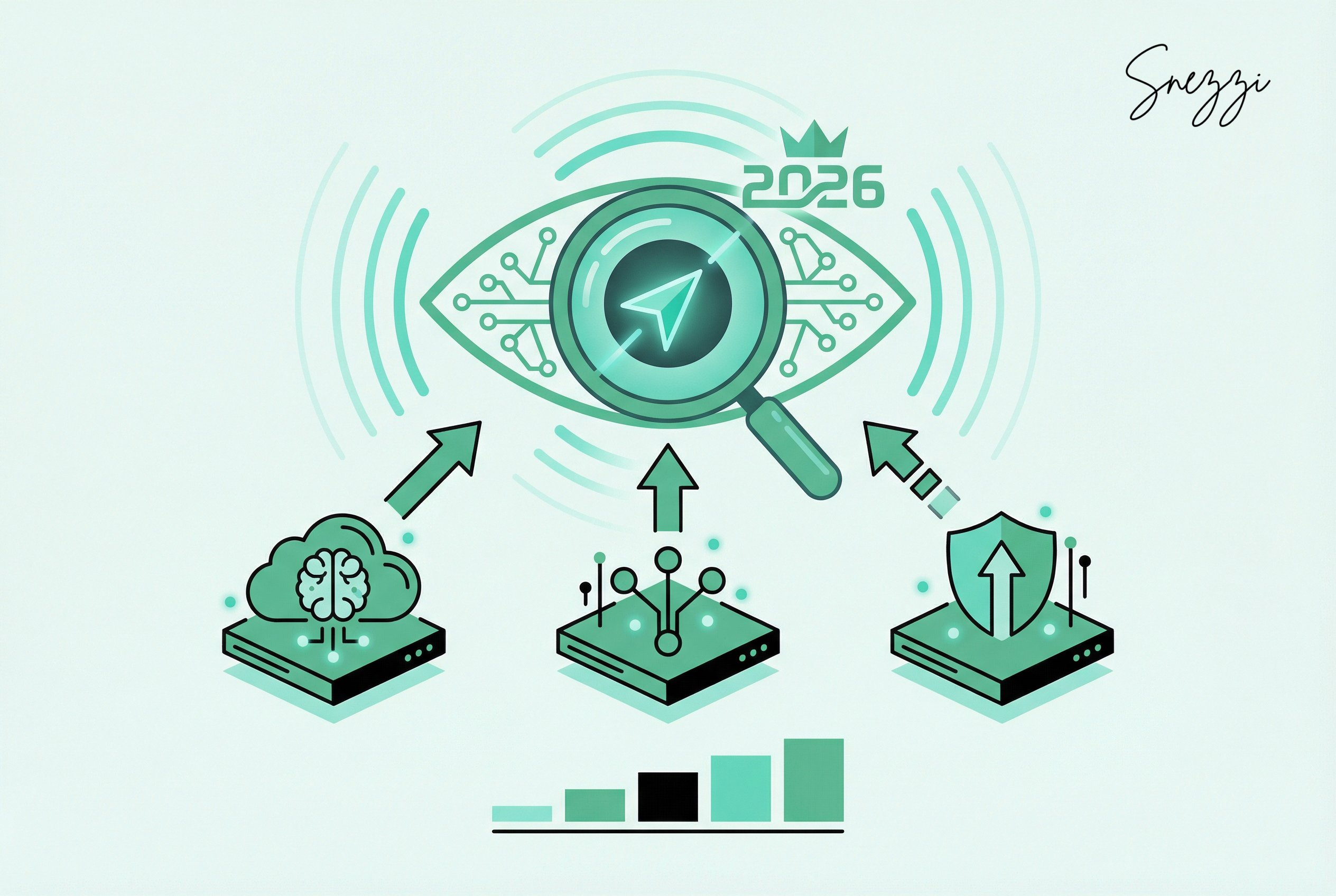
If you’re wondering why your website traffic is tanking despite solid SEO, here’s the uncomfortable truth: AI platforms like ChatGPT, Perplexity, and Google’s AI Overviews are answering customer questions without sending them to your site. In fact, 58.5% of US Google searches end without a single click.
The good news? AI visibility platforms help you track, monitor, and optimize how your brand appears in these AI-generated responses. Think of them as SEO tools for the AI era. They show you which prompts mention your brand, how you rank against competitors, and what content changes will get you cited more often.
After testing nine leading platforms, here’s what stands out: Snezzi offers the most hands-off approach with dedicated AI agents and a 90-day guarantee, Profound excels at enterprise-scale autonomous optimization, and Otterly delivers the best value for small teams tracking multiple AI engines. Each solves the same core problem differently, so your choice depends on whether you want done-for-you service, self-serve analytics, or something in between.
AI visibility platforms are specialized tools that monitor and optimize how your brand appears across AI search engines and chatbots. While traditional SEO focuses on Google rankings, these platforms track citations in ChatGPT, Claude, Perplexity, Gemini, and similar AI systems that increasingly answer queries directly.
Here’s how they work: The platform runs thousands of relevant prompts through multiple AI engines daily, checking if your brand gets mentioned, where you rank compared to competitors, what sources the AI cites, and whether the sentiment is positive or negative. You get dashboards showing your “AI visibility score” across different topics and platforms.
The better platforms go beyond monitoring. They audit your website for AI-readability issues, suggest content optimizations, and some even generate AI-optimized articles automatically. It’s like having an SEO team specifically focused on making AI platforms recommend your brand.
Why does this matter now? AI search traffic jumped 527% year-over-year, and Google’s AI Overviews now appear on 48% of tracked queries, up 58% from last year. Traditional organic traffic is declining as people get answers directly from AI without clicking through. If you’re not visible in these AI responses, you’re invisible to a rapidly growing segment of potential customers.
The shift is particularly brutal for e-commerce and SaaS brands that relied on Google traffic. One supplement company saw ad costs skyrocket as organic leads dried up, until they started optimizing for AI visibility and cut ad spend by 40% while growing traffic 220%.
The data behind AI visibility platforms comes from real-world tracking and industry studies. [Semrush reports AI search traffic increased 527% year-over-year](https://www.semrush.com/blog/ai-seo-statistics/), fundamentally changing how consumers discover brands. This isn’t a future trend; it’s happening right now.
Research shows AI Overviews appear on 48% of queries, up 58% from last year, meaning nearly half of all searches now get AI-generated answers before traditional results. Even more concerning, 58.5% of US searches end without any click, as AI platforms resolve queries directly.
The business impact is measurable. Case studies document brands achieving 5x increases in AI mentions and 220% organic traffic growth [Snezzi case studies] after implementing AI visibility strategies. Another company increased AI visibility from 3.2% to 22.2% in just one month [Profound Ramp case study] using systematic optimization.
Gartner predicts traditional search engine volume will drop 25% by 2026 due to AI chatbots and virtual agents. Brands that adapt early gain significant competitive advantages before their industries catch on.
Snezzi takes a completely different approach than self-serve platforms. Instead of giving you analytics dashboards to figure out yourself, they deploy a network of AI agents that handle everything, tracking, auditing, content creation, and optimization, while you focus on running your business.
What makes this compelling is the accountability model. Snezzi guarantees qualified AI leads within 90 days or continues service free until you get results. That’s rare in marketing tech. The platform uses four specialized agents: Tracker monitors 50-200+ prompts across eight AI platforms daily, Audit runs weekly technical checks, Content generates 10-50+ optimized articles monthly, and Reporting delivers ROI dashboards.
The Unleash Wellness case study shows what’s possible. This holistic pet supplement brand went from ad-dependent to 5x AI mentions, 220% organic growth, and 40% ad spend reduction. Initial results typically appear in 4-6 weeks, with significant gains in 2-3 months.
Pros:
Cons:
Best For: E-commerce and SaaS brands with high customer acquisition costs who want guaranteed results without managing the technical details themselves.
Profound stands out with autonomous AI agents that don’t just track visibility, they actively optimize your presence across multiple LLMs. Think of it as having a team of specialists constantly testing and improving your AI search performance.
The platform captures real front-end user-facing data from AI engines, not estimates. You see exactly what consumers see when they ask ChatGPT or Perplexity about your category. The Prompt Volumes feature reveals actual AI search demand, helping you prioritize which queries matter most.
Ramp’s results tell the story: 7x visibility increase from 3.2% to 22.2% in one month, jumping from 19th to 8th in their category. Another client, 1840 & Co., went from 0% to 11% AI visibility in remote staffing within 30 days. Thousands of teams use Profound, including Figma, Walmart, MongoDB, and Chime.
Pros:
Cons:
Best For: Enterprise B2B SaaS and fintech marketing teams managing high-competition categories who need scalable, autonomous optimization.
Otterly delivers full AI visibility tracking at prices that make sense for small teams. At $29/month for the Lite plan, it’s the most accessible entry point for testing AI visibility strategies before committing bigger budgets.
The platform monitors six AI search engines, ChatGPT, Perplexity, Google AI Overviews, Gemini, Copilot, and more, with daily automated tracking. You get brand sentiment analysis, position tracking, citation monitoring, and GEO audits covering 25+ on-page factors. The Looker Studio integration lets you build custom dashboards.
What’s impressive is the user satisfaction: 4.9/5 rating from 41 G2 reviews, with 95% of customers gaining measurable insights within one month. Gartner named Otterly a Cool Vendor for AI in Marketing 2025, and over 20,000 marketing professionals use the platform.
Pros:
Cons:
Best For: Marketing agencies and SMEs managing multiple brands who need affordable, full tracking without manual monitoring overhead.
Peec AI brings enterprise-grade tracking to startups and mid-sized brands with intuitive dashboards and fast setup. The Berlin-based platform raised $21 million in Series A funding and serves over 1,300+ marketing teams, including Attio, ElevenLabs, and Chanel.
The platform excels at visibility, position, and sentiment metrics across major LLMs. You can organize custom prompts with tags, benchmark against competitors, analyze which sources AI platforms cite, and get actionable strategy recommendations. The source analysis feature reveals whether AI engines prefer your G2 reviews, LinkedIn content, or blog posts.
Attio’s case study shows 47-51% visibility with positive sentiment trends in competitive CRM startup prompts. Users report 5.2% monthly visibility growth trends and identify optimization opportunities before competitors catch on.
Pros:
Cons:
Best For: SEO and content managers at startups and growth-stage companies needing clear insights and competitor intelligence without complexity.
Semrush added AI Visibility Toolkit to its SEO platform, making it convenient for existing users to expand into AI search optimization. The toolkit leverages a database of 100+ million LLM prompts to track brand mentions across ChatGPT, Google AI Overviews, Perplexity, and Gemini.
The integration advantage is real. You can correlate traditional SEO performance with AI visibility, use existing keyword research for prompt discovery, and manage everything in one platform. Semrush’s AI Content tools help generate optimized articles designed for both Google and AI citations.
With over 10 million users who’ve tried Semrush and 117,000 paying customers, it’s the most established platform on this list. G2 ranked it #1 for SEO and Answer Engine Optimization in Spring 2026.
Pros:
Cons:
Best For: Mid-sized digital agencies and e-commerce brands already using Semrush who want to add AI visibility without switching platforms.
SE Ranking built its AI Visibility Tracker specifically for agencies managing multiple clients. The platform’s white-label reporting lets you brand dashboards and automate client reports, saving roughly 50% of reporting time according to user testimonials.
The proprietary dataset includes 5.4 billion keywords and 2.2 billion domains, enabling precise AI visibility analysis across 150+ countries. You get 100% accurate rankings (their claim), unlimited competitor research, and historical data for tracking strategy improvements over time.
With 1.5 million SEO professionals using the platform and a 4.8/5 G2 rating, SE Ranking earned #1 rankings in six G2 categories including Answer Engine Optimization for Spring 2026.
Pros:
Cons:
Best For: Digital agencies managing 10-30 client projects requiring efficient white-label reporting and multi-geo SEO workflows.
Scrunch differentiates with its Agent Experience Platform (AXP) that delivers AI-optimized content directly to AI agents without disrupting human user experience. This unique approach helps brands get cited more often by making it easier for AI platforms to find and understand your content.
The platform monitors nine LLMs with real-time citation tracking, AI traffic analytics, bot crawl monitoring, and competitor benchmarking by prompt, geography, and persona. The multi-workspace architecture makes it ideal for agencies managing multiple client brands with separate dashboards and user permissions.
Over 500 companies trust Scrunch, including Lenovo and Skims. Clients report 9x increases in AI search sign-ups and 4x acquisition growth after implementing recommendations.
Pros:
Cons:
Best For: Digital agencies managing 5+ client brands needing multi-workspace tracking with enterprise-grade security and unique AXP capabilities.
Athena positions itself as a unified command center for AI search optimization, combining monitoring, competitive intelligence, and automated recommendations in one platform. The executive dashboards make it easy to show ROI to leadership, important for mid-market teams justifying new tool investments.
The platform tracks eight LLMs with impersonation detection alerts when competitors or AI hallucinations misrepresent your brand. You get AI-powered content optimization, gap analysis, brand sentiment monitoring, and PR tracking all integrated.
Case studies show strong results: Grüns achieved 6x share of voice lift in 60 days, while Popl.co grew leads 38% month-over-month from AI search. The 4.9/5 G2 rating from 31 reviews reflects high user satisfaction.
Pros:
Cons:
Best For: B2B software and e-commerce marketing teams with 50-500 employees transitioning from SEO to GEO without full enterprise resources.
Surfer SEO approaches AI visibility through content optimization rather than just tracking. The platform’s AI Tracker monitors brand visibility in ChatGPT, Google Gemini, and Perplexity, but the real value comes from tools that help you create content AI platforms want to cite.
The Content Editor provides real-time NLP-based scoring as you write, ensuring semantic optimization for both Google and AI search. Surfer AI can generate ready-to-rank articles in minutes, while Auto Internal Links and the Topical Map feature build topical authority that AI platforms recognize.
With 150,000+ content creators using Surfer across 159 countries, it’s the most content-focused platform on this list. Users report 15% organic traffic growth in the first month after implementing optimizations.
Pros:
Cons:
Best For: Marketing agencies and in-house content teams managing 3-10 members who prioritize content creation alongside visibility tracking.
| Platform | Best For | Starting Price | Key Strength | Platforms Tracked |
|---|---|---|---|---|
| Snezzi | Hands-off management | Custom | Done-for-you service with guarantee | 8+ AI platforms |
| Profound | Enterprise automation | Custom | Autonomous agents and real data | 10+ AI engines |
| Otterly | Budget-conscious teams | $29/mo | Best value for multi-platform tracking | 6 AI platforms |
| Peec AI | Fast-growing startups | Custom | Intuitive dashboards and fast setup | Multiple LLMs |
| Semrush | Existing Semrush users | Included | Integration with SEO workflows | 4+ AI platforms |
| SE Ranking | Agency white-label | $69/mo | Automated client reporting | Multiple AI engines |
| Scrunch | Multi-client agencies | $250/mo | Agent Experience Platform (AXP) | 9 LLMs |
| Athena | Mid-market B2B | $295/mo | Unified command center | 8+ LLMs |
| Surfer SEO | Content-first teams | $49/mo | Content optimization tools | 3 AI platforms |
Start by clarifying whether you want done-for-you service or self-serve analytics. If you lack time or expertise to implement optimizations yourself, Snezzi’s managed approach with guaranteed results makes sense despite higher costs. If you have capable in-house teams, self-serve platforms like Otterly or Peec AI deliver better value.
Consider your current tool stack. Already paying for Semrush? Adding their AI Visibility Toolkit avoids another subscription and keeps workflows unified. Using Surfer SEO for content? Their AI tracking integrates naturally. Starting fresh? Standalone platforms like Profound or Otterly offer more specialized features.
Budget matters, obviously. Otterly’s $29/month entry point lets you test AI visibility strategies before committing bigger budgets. Mid-market teams often find $250-500/month platforms like Scrunch or Athena hit the sweet spot between features and affordability. Enterprise budgets unlock Profound’s autonomous agents or Snezzi’s full-service approach.
Think about scale and complexity. Managing one brand? Simple dashboards from Peec AI or Otterly work great. Running an agency with 10+ clients? SE Ranking’s white-label reporting or Scrunch’s multi-workspace architecture become essential. Enterprise with 50+ brands? Profound’s autonomous optimization scales better than manual platforms.
Platform coverage varies significantly. Most track ChatGPT, Perplexity, and Google AI Overviews, but coverage of Claude, Gemini, Copilot, and others differs. Check which AI platforms your customers actually use. B2B buyers might prefer Claude, while consumers lean toward ChatGPT. Match your platform choice to your audience’s behavior.
Integration needs matter for workflow efficiency. Need data in Looker Studio? Otterly, Scrunch, and SE Ranking integrate directly. Want WordPress publishing? Surfer SEO connects seamlessly. Require API access for custom dashboards? Enterprise plans from Profound or Scrunch provide that flexibility.
Don’t overlook support and education. Managed services like Snezzi include 24/7 expert support and handle implementation. Self-serve platforms vary. Some offer extensive documentation and responsive support, others leave you figuring things out. Read recent G2 reviews to gauge actual support quality.
Finally, consider your optimization approach. Content-heavy strategies benefit from Surfer SEO’s creation tools or Snezzi’s automated article generation. Technical optimization needs align with platforms offering detailed audits like Otterly’s 25+ factor GEO checks. Competitive intelligence priorities match Peec AI’s source analysis or Profound’s benchmarking.
Begin by auditing your current AI visibility before choosing a platform. Manually search relevant prompts in ChatGPT, Perplexity, and Google AI Overviews to see if your brand appears. Document where you rank, what competitors show up, and which sources get cited. This baseline helps you measure improvement and choose the right tool.
Most platforms offer free trials or demos, use them. Sign up for Otterly’s 14-day trial to test multi-platform tracking. Request demos from Profound, Snezzi, or Athena to see enterprise features in action. Peec AI and others provide onboarding calls that reveal whether their approach matches your needs.
Start with a focused prompt set rather than tracking everything. Identify 10-20 high-value queries your ideal customers ask AI platforms. Think “best [product category] for [use case]” or “how to solve [problem] with [solution type].” Quality matters more than quantity when you’re learning.
Set realistic expectations for timeline. Initial visibility improvements typically appear in 4-6 weeks as AI platforms crawl updated content. Significant gains usually take 2-3 months of consistent optimization. This isn’t instant like paid ads, it’s more like SEO with a faster feedback loop.
Prioritize quick wins first. Fix obvious issues like missing structured data, thin content on key pages, or broken citations. Update your most-visited pages with AI-friendly formatting, clear headings, concise answers, and authoritative sources. These changes often boost visibility faster than creating entirely new content.
Monitor competitor strategies actively. See which brands dominate AI responses in your category and analyze what they’re doing differently. Check their cited sources, content structure, and topical coverage. Most platforms include competitor tracking, use it to identify gaps in your own strategy.
Document everything as you test. Track which optimizations correlate with visibility improvements, which prompts drive actual traffic, and which AI platforms matter most for your business. This data helps you double down on what works and abandon what doesn’t.
Consider starting with one platform and expanding later. You don’t need to track every AI engine immediately. Focus on where your customers actually search, often ChatGPT and Google AI Overviews for most businesses. Add Perplexity, Claude, or others as you scale.
AI visibility platforms solve a real problem: your brand becoming invisible as consumers shift from Google to ChatGPT, Perplexity, and other AI search tools. The right platform depends on whether you want hands-off management (Snezzi), enterprise automation (Profound), affordable multi-platform tracking (Otterly), or content-focused optimization (Surfer SEO).
Start by testing your current AI visibility manually, then choose a platform matching your budget and team capacity. Most offer trials or demos, use them to find the best fit before committing. The brands that optimize for AI visibility now will dominate their categories as this shift accelerates.
Don’t wait until your competitors have already captured the AI search market in your industry. The data shows AI search traffic growing 527% year-over-year while traditional organic declines. Early movers gain compounding advantages as AI platforms learn to trust and cite their content consistently.
By the way, if you’re looking for a platform that handles the entire optimization process for you, Snezzi offers done-for-you services with a 90-day guarantee, worth exploring if you want results without managing the technical details yourself.