How to Improve Brand AI Visibility in 2026
Master how to improve brand AI visibility in 2026 with this step-by-step guide. Optimize for ChatGPT, Claude, Perplexity using Snezzi's tracking, analysis, and DFY services for maximum discovery.
Master how to improve brand AI visibility in 2026 with this step-by-step guide. Optimize for ChatGPT, Claude, Perplexity using Snezzi's tracking, analysis, and DFY services for maximum discovery.
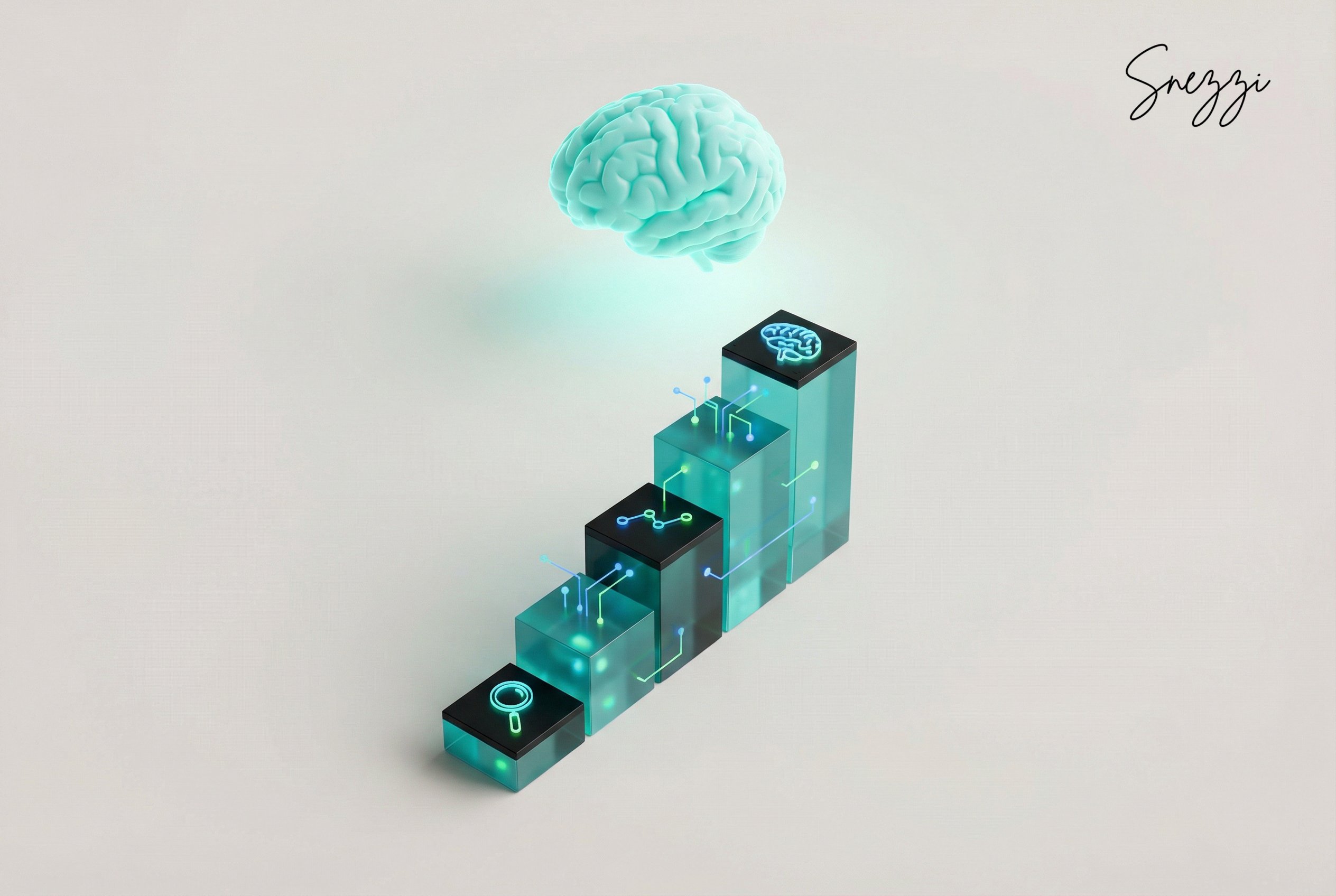
Many web users now rely on AI-generated search summaries as their primary source instead of visiting brand websites. Yet most vendors receive zero ChatGPT citations when consumers ask for category recommendations. This disconnect creates a massive visibility gap, and opportunity.
The challenge is not just technical. AI engines like ChatGPT, Claude, and Perplexity use probabilistic retrieval systems that favor earned media, structured data, and authoritative signals over traditional SEO tactics. Most brands optimize for Google while AI platforms cite their competitors.
This guide shows how to improve brand AI visibility through systematic audits, technical optimization, and continuous monitoring. You will learn engine-specific strategies backed by recent research, including how platforms like Snezzi automate tracking and deliver actionable recommendations. The result: measurable citations and mentions that drive high-intent traffic.
Before diving into optimization, assemble the right foundation. You will need access to your website analytics and Google Search Console to establish baseline traffic patterns. AI shoppers spend more monthly than traditional intenders, making accurate tracking essential.
An AI visibility platform subscription provides the infrastructure for monitoring mentions and citations across engines. Basic knowledge of SEO and schema markup helps, though not required. Many teams succeed with Done For You services that handle technical execution. Content management system access ensures you can implement changes quickly.
The difference between AEO (Answer Engine Optimization) and GEO (Generative Engine Optimization) matters here. AEO targets deterministic results from traditional search engines. GEO focuses on probabilistic AI responses that cite sources dynamically. Both reduce click-through rates, but GEO opens new visibility channels.
For small teams or businesses lacking in-house expertise, start with Snezzi Growth to access DFY execution support. The platform handles prompt tracking, competitive analysis, and optimization recommendations while you focus on core business operations.
Start by querying AI engines directly with brand-related prompts. Ask ChatGPT, Claude, and Perplexity questions your customers would pose: “best [your category] for [use case]” or “top brands for [problem you solve].” Document every mention, citation, and ranking position.
The results often shock brands. Few Google AI Overviews include underlined links, and citation patterns vary between engines. ChatGPT favors recent authoritative content. Claude shows strong earned media bias and reuses English-language domains across translations. Perplexity pulls from diverse sources including user-generated content.
Track these variations systematically. Create a spreadsheet logging which engines cite your brand, for which queries, and in what context, mention versus linked citation. Compare your visibility against top three competitors. The gap reveals opportunity.
Specialized dashboards automate this process. Rather than manual testing, platforms continuously monitor relevant prompts and benchmark your performance. Identifying these gaps guides optimization priorities.
AI engines use Retrieval-Augmented Generation (RAG) to pull real-time sources for citations. Structured data provides the context RAG systems need to understand your content’s relevance and authority. Implement schema markup for your organization, products, FAQs, and articles.
Site speed and mobile responsiveness affect crawlability. AI platforms penalize slow-loading pages just like traditional search engines. Run Google PageSpeed Insights and address Core Web Vitals issues, particularly Largest Contentful Paint and Cumulative Layout Shift.
NAP consistency (Name, Address, Phone) across directories signals legitimacy to AI systems evaluating source credibility. Audit your listings on Google Business Profile, Yelp, industry directories, and data aggregators. Inconsistencies confuse RAG retrieval and dilute authority signals.
Fix technical crawl errors through robots.txt and XML sitemaps. AI crawlers respect these directives when indexing content for future retrieval. Earned media plays an outsized role. Brand mentions correlate with AI visibility. Securing editorial coverage from authoritative publications directly improves citation likelihood across all engines.
E-E-A-T principles (Experience, Expertise, Authoritativeness, Trustworthiness) guide content that AI engines cite confidently. Demonstrate first-hand experience through case studies, original research, and specific examples. Cite credentials, certifications, and industry recognition that establish expertise.
GEO methods improve visibility when content uses natural, conversational language matching how users phrase AI queries. Write in second person (“you” and “your”) addressing reader questions directly. Avoid jargon unless your audience expects technical terminology.
Target long-tail, question-based queries that trigger AI responses. “How to [solve problem]” and “best [product type] for [specific need]” formats align with how consumers prompt AI engines. Structure content with clear headings, bullet points, and definitions that RAG systems easily parse.
Incorporate visuals with descriptive alt text and transcripts. While AI engines cannot “see” images, they index surrounding text and metadata. Video transcripts provide additional citation opportunities. The goal: make every content element machine-readable and contextually clear.
As one expert notes: “SEO can get you in the room, but GEO can put you in the conversation.” Traditional optimization establishes presence. AI-specific content earns citations in the responses consumers actually read.
Manual prompt testing scales poorly beyond initial audits. Snezzi Growth plan automates continuous monitoring across ChatGPT, Claude, and Perplexity, tracking relevant queries daily. The platform identifies citation trends, competitive shifts, and optimization opportunities in real-time dashboards.
Prompt tracking reveals which queries generate citations versus mentions. A citation (linked reference) drives traffic. A mention builds awareness but does not convert. Understanding this distinction guides content strategy. You will prioritize topics and formats that earn actual links.
Citation source intelligence shows exactly which pages AI engines reference. Analyze these pages for common patterns: content structure, word count, schema implementation, and authority signals. Replicate successful elements across your site.
Competitive analysis reports expose gaps in competitor coverage. If rivals dominate citations for “best [category] for beginners” but ignore advanced use cases, you have found your differentiation angle. Target underserved queries where your expertise provides genuine value.
For fast-growing teams managing multiple optimization priorities, Done For You services handle execution while you validate results. Snezzi’s outcome accountability model means they are invested in measurable citation improvements, not just deliverables.
Domain citations change frequently monthly as AI engines update training data and adjust retrieval algorithms. What works today may fail next month. Real-time dashboards catch these shifts before they tank visibility.
Track visibility scores (percentage of target queries generating citations), traffic from AI referrals, and citation diversity across engines. Set weekly review cadences to identify trends. A sudden drop in Claude citations might signal content freshness issues. Rising Perplexity mentions without links suggests schema optimization opportunities.
Snezzi monitoring provides weekly optimization recommendations based on your specific performance data. Rather than generic best practices, you will receive actionable tasks: “Update [specific page] schema,” “Create content targeting [emerging query],” “Secure editorial coverage from [identified domain].”
Apply these recommendations systematically. Test changes on high-traffic pages first to validate impact. Track before-and-after metrics for each optimization. Build a playbook of what works for your brand, industry, and target queries.
Use 24/7 expert support when troubleshooting complex issues. Citation volatility often stems from multiple factors: content freshness, technical errors, competitive content launches, or algorithm updates. Experienced support teams diagnose root causes faster than trial-and-error testing.
Neglecting structured data implementation ranks as the most common error. Brands assume traditional SEO suffices, then wonder why AI engines ignore their content. Schema markup is not optional for AI visibility. It is foundational for RAG retrieval.
Overlooking mobile and speed optimizations creates similar problems. AI reduces top organic click-through rates significantly, making every citation precious. Slow-loading pages that frustrate users after clicking AI citations waste hard-won visibility.
Ignoring competitor prompt analysis leaves gaps in your strategy. You might optimize for queries competitors already dominate while missing open opportunities. Systematic competitive tracking reveals where to focus limited resources for maximum impact.
Failing to update content regularly signals staleness to AI retrieval systems. Engines favor recent, maintained content over outdated information. Establish quarterly content audits to refresh statistics, add new examples, and update recommendations.
Low visibility despite strong SEO often indicates a gap between SEO and GEO. Validate schema implementation using Google’s Rich Results Test. Audit prompts to identify which queries should trigger citations but do not. The problem usually lies in content structure or authority signals, not technical SEO.
Inaccurate citations happen when AI engines reference outdated or incorrect information from your site. Update authoritative sources, add publication dates, and implement article schema with modified timestamps. Fresh, clearly dated content reduces hallucination risk.
Competitor outranking requires systematic gap analysis. Custom Snezzi DFY services provide detailed competitive intelligence for multi-location brands. The analysis reveals which queries competitors win, what content formats they use, and which authority signals they have built that you lack.
Fluctuating rankings stem from algorithm updates, competitive content launches, or citation changes. Monitor engine-specific changes through industry publications and AI platform announcements. Diversify your citation sources across multiple engines to reduce dependency on any single platform’s algorithm.
Improving brand AI visibility requires systematic execution across technical optimization, content strategy, and continuous monitoring. The brands winning AI citations treat it as a distinct channel requiring specialized tactics beyond traditional SEO.
Start with a thorough audit using actual prompts your customers ask. Optimize your technical foundation through schema markup, site speed, and NAP consistency. Create authoritative, conversational content that answers specific questions. Deploy specialized tracking to catch citation changes before they impact traffic.
The opportunity is substantial. Most AI shoppers take verification steps after receiving AI recommendations, meaning citations drive high-intent traffic. Yet most brands remain invisible because they are optimizing for yesterday’s search space.
Snezzi provides the infrastructure to compete: automated prompt tracking, competitive benchmarking, citation source intelligence, and Done For You optimization services. Whether you are a small business building initial visibility or an enterprise managing multiple locations, the platform scales with your needs while maintaining outcome accountability.
The question is not whether AI will reshape brand discovery. It already has. The question is whether your brand will appear in those conversations.